Cryotherapy Safety: Who Should NOT Try It
TL;DR
Cryotherapy contraindications are health conditions that make brief cold exposure unsafe. You should not try whole-body cryotherapy if you have uncontrolled high blood pressure, severe heart or lung disease, a cold-triggered disorder like Raynaud’s or cold urticaria, or are pregnant. Relative contraindications, including diabetes with neuropathy, recent surgery, or certain nerve conditions, call for a doctor’s clearance first. A reputable studio screens every client with a health questionnaire before the first session.
Table of Contents
- What Are Cryotherapy Contraindications?
- Absolute Contraindications: When to Skip Cryotherapy Entirely
- Relative Contraindications: Get Cleared First
- Pregnancy, Age, and Other Special Cases
- Whole-Body vs Localized Cryo: Do the Rules Differ?
- How a Reputable Studio Screens You First
- Normal Side Effects vs Warning Signs
What Are Cryotherapy Contraindications?
A contraindication is a specific reason a treatment is not safe for a particular person. With cold therapy, the body responds to short, intense cooling by constricting blood vessels, spiking heart rate slightly, and shunting blood toward the core. For most healthy adults that response is brief and well tolerated. For people with certain cardiovascular, circulatory, or nerve conditions, the same response can be a genuine hazard. Understanding cryotherapy contraindications is the difference between a safe, productive session and a real risk to your health.
It helps to separate two categories. Absolute contraindications mean you should not do the treatment at all. Relative contraindications mean the treatment may be possible, but only after a conversation with your physician and with modifications in place. Throughout this guide we keep the framing honest: cryotherapy is a wellness and recovery tool, not a medical treatment, and nothing here replaces advice from your own doctor. If you are new to the topic, our Cryo 101 primer covers how the process works before you weigh whether it is right for you.
Absolute Contraindications: When to Skip Cryotherapy Entirely
These conditions are widely recognized reasons to avoid whole-body cryotherapy. If any apply to you, the answer is a firm no, not a “maybe with a waiver.”
- Uncontrolled high blood pressure.The cold-induced vessel constriction can push blood pressure higher during a session.
- Serious heart conditions.Recent heart attack, unstable angina, heart failure, or an implanted device like a pacemaker.
- Severe lung or respiratory disease.Cold air and the stress response can aggravate conditions such as advanced COPD.
- Cold-triggered disorders.Raynaud’s phenomenon, cold urticaria (hives from cold), cryoglobulinemia, and similar conditions where cold itself causes a harmful reaction.
- Deep vein thrombosis or active blood clots.Circulatory changes from cold exposure are a documented concern.
- Covered in more detail below, but treated as an absolute contraindication by most studios.
- Acute infection or fever.Wait until you have fully recovered.
A trustworthy studio will turn you away, politely and firmly, if any of these surface during intake. That refusal is a sign the operator takes safety seriously, not a sign you are missing out.
Relative Contraindications: Get Cleared First
Relative contraindications are the larger and grayer group. Cryotherapy may still be appropriate, but you need a green light from your physician and, in some cases, adjustments to session length or temperature. The table below outlines common examples and why they warrant caution.
| Condition | Why It Matters | Typical Path Forward |
| Diabetes with neuropathy | Reduced sensation makes it harder to feel cold injury | Doctor clearance, shorter sessions, close monitoring |
| Controlled high blood pressure | Stable but still cold-sensitive | Physician sign-off, blood pressure checked before session |
| Peripheral neuropathy | Numbness can mask overexposure | Medical clearance and a conservative first session |
| Recent surgery | Healing tissue and circulation concerns | Wait for surgeon approval, often several weeks |
| Seizure disorder | Physical stress can be a trigger for some | Discuss with your neurologist |
| Open wounds or skin infections | Cold can impair healing in the area | Cover or avoid the area, or postpone |
The pattern is consistent: when in doubt, ask your doctor before you book. A reputable provider would rather you arrive with clearance than guess. You can review which treatments a studio offers, from cryo slimming to cryofacials, on a clear services page, then bring that list to your physician so the conversation is specific.
Pregnancy, Age, and Other Special Cases
Pregnancy. Whole-body cryotherapy is not recommended during pregnancy. There is little safety research in this population, and responsible studios decline pregnant clients rather than experiment. The same caution generally applies while breastfeeding for treatments involving injectables or aggressive cold protocols.
Minors. Most studios set a minimum age, commonly 18, or require parental consent for older teens. A young athlete may be a candidate with guardian involvement, but policies vary, so ask before assuming.
Older adults. Age alone is not a contraindication. A healthy, active 65-year-old can often use cold therapy safely. The deciding factors are the underlying conditions covered above, not the number on a birth certificate. Honest expectations matter here: cryotherapy supports recovery and may aid a slimming or skin routine, but it is not a cure for age-related conditions.
Cold intolerance. Some people simply do not tolerate cold well, even without a named disorder. If you feel faint, dizzy, or panicked, that discomfort is reason enough to stop, regardless of what a screening form says.
Whole-Body vs Localized Cryo: Do the Rules Differ?
Yes, and the distinction matters. Whole-body cryotherapy exposes nearly your entire body to extreme cold for two to three minutes, which is why cardiovascular and respiratory contraindications weigh so heavily. Localized treatments, such as targeted cryo slimming on the abdomen or flanks, or a cryofacial, apply cold to a small area and carry a narrower risk profile.
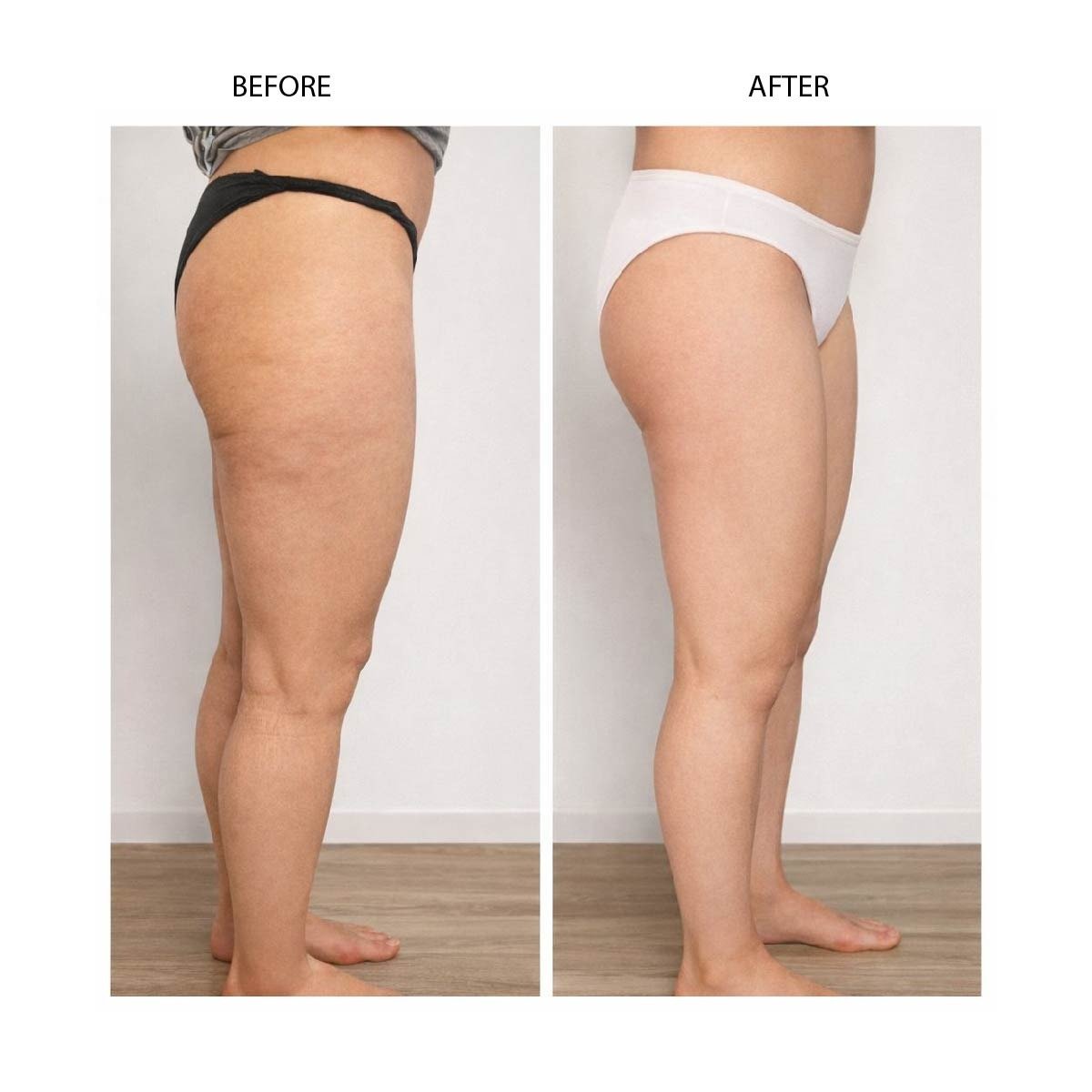
That said, localized does not mean risk-free. Cold-triggered disorders, neuropathy in the treated area, recent surgery near the site, and open skin all still apply. Treatments that pair cold with muscle stimulation or other modalities add their own screening questions. The honest takeaway: every modality has its own list, and “I did localized cryo fine, so whole-body is fine too” is not a safe assumption. Looking at real client outcomes on a before and after gallery can help you set realistic goals, but it does not replace a screening conversation.
How a Reputable Studio Screens You First
Good studios do not hand you a waiver and rush you into a chamber. The intake process is the safety system, and it should look something like this:
- Health questionnaire.A written form covering heart, blood pressure, circulation, nerve conditions, pregnancy, recent surgery, and medications.
- Review and follow-up questions.A trained staff member reviews your answers and asks about anything flagged.
- Clearance check.If a relative contraindication appears, they ask for physician sign-off before proceeding.
- First-session adjustments.Shorter duration or a more moderate protocol for newcomers.
- On-site monitoring.Staff present and reachable for the entire session, with a clear way to stop early.
If a provider skips these steps, treat that as a red flag and walk out. Thoughtful screening is also why transparent pricing helps: studios that publish packages and clear policies tend to run a tighter, safer operation.
Normal Side Effects vs Warning Signs
Knowing what is normal keeps you from panicking, and knowing what is not keeps you safe.
Normal, temporary effects include redness, tingling, numbness that fades within minutes, and a short-lived energy lift. Mild skin sensitivity after a localized treatment is also common.
Warning signs that mean stop and seek help include skin that blisters or turns white and waxy (a sign of a cold burn), chest pain, shortness of breath, dizziness that does not pass, or hives spreading beyond the treated area. These are uncommon when screening is done well, which is exactly why screening is non-negotiable.
FAQ: Cryotherapy Contraindications
Can I do cryotherapy with high blood pressure?
It depends on control. Uncontrolled high blood pressure is an absolute contraindication. Well-controlled blood pressure is usually a relative one, meaning you need physician clearance and a pre-session reading before any studio should proceed.
Is cryotherapy safe during pregnancy?
No. Whole-body cryotherapy is not recommended during pregnancy because safety data in this group is lacking, and responsible studios decline pregnant clients rather than take the risk.
I have Raynaud’s. Can I still get a cryofacial?
Raynaud’s is a cold-triggered disorder and a strong contraindication for cold therapy of any kind. Talk to your doctor, and expect most studios to decline, because cold itself is the trigger for your condition.
Does taking medication rule me out?
Not automatically, but some medications affecting blood pressure, circulation, or sensation matter. List everything you take on your intake form so staff can flag anything that needs a doctor’s input.
What happens if I do not disclose a condition?
You remove the studio’s ability to keep you safe and put yourself at real risk. The screening only works if you are honest, so disclose everything, even items you think are minor.
Cryotherapy can be a genuinely useful recovery, slimming, and skin tool for the right person, and an honest provider will tell you plainly when you are not that person. Before you book, run your health history past your physician, then bring your questions to a studio that screens carefully and explains the trade-offs. Start with our Cryo 101 guide, browse the full services menu, and you will walk in knowing exactly what to ask.
Author: Cryo Sanctuary
Cryo Sanctuary is a wellness studio in Renton, Washington focused on non-invasive body contouring, targeted cryotherapy, and aesthetic recovery. The studio operates as a single-practitioner practice, which means every session is performed and supervised by the same person from intake to follow-up, with no rotating staff and no franchised technician model. Treatments are delivered on a precision CO2 cryotherapy system holding target tissue at −78°C (−108°F) during slimming and targeted recovery sessions. Services include Cryo Slimming (targeted CO2 fat reduction), EMS Body Sculpting (HIFEM technology comparable to Emsculpt Neo), Cryo Facials, Targeted Cryotherapy for Pain and Recovery, Cryo for Skin Conditions (eczema, psoriasis, acne, dermatitis), and Longevity Shots (NAD+, Sermorelin, B12 MIC). The Before & After gallery features real Cryo Sanctuary clients photographed at the Renton studio, with no stock imagery or staging; typical outcomes documented include 0.5 to 1.5 inches of circumference reduction per treated area over a four-session course. Cryo Sanctuary holds a 4.8+ Google rating with 26+ five-star reviews, was named a 2025 Best of Moss Bay Wellness Center by BusinessRate, and is listed on BBB and Yelp. Services are positioned as wellness care, not a substitute for medical treatment.